Creating an Evening Wind-Down Ritual
Updated: Jun 1
This post may contain affiliate links. If you choose to purchase through these links, I may earn a small commission at no extra cost to you. I only share products that I genuinely love and believe add value to a slower, more intentional way of living. Thank you for your support!
There is a point in the evening when your energy begins to shift. The light softens. The day starts to loosen. Your body slows, even if your mind is still moving. Most days don’t have a clear ending. They blur from productivity into distraction, leaving you feeling both tired and wired.
For a long time, I thought a good evening routine had to be structured and consistent. No screens. Long rituals. The same steps every night. Real life rarely looks like that.
What I’ve found instead is that a wind-down ritual isn’t about doing everything right. It’s about creating a gentle transition out of the day.
Something simple you can return to, even when you’re tired.

What “Winding Down” Actually Means to Me
Winding down doesn’t mean doing more at the end of the day. It means doing less, more intentionally.
Some evenings are slow and quiet. Others are shorter and more functional.
The goal isn’t to follow the routine perfectly. The goal is to create a sense of closure. To let the day end, instead of carrying it into the night.
My Evening Wind-Down Ritual (In Real Life)
1. Shifting the Lighting
The first thing I do is soften the environment.
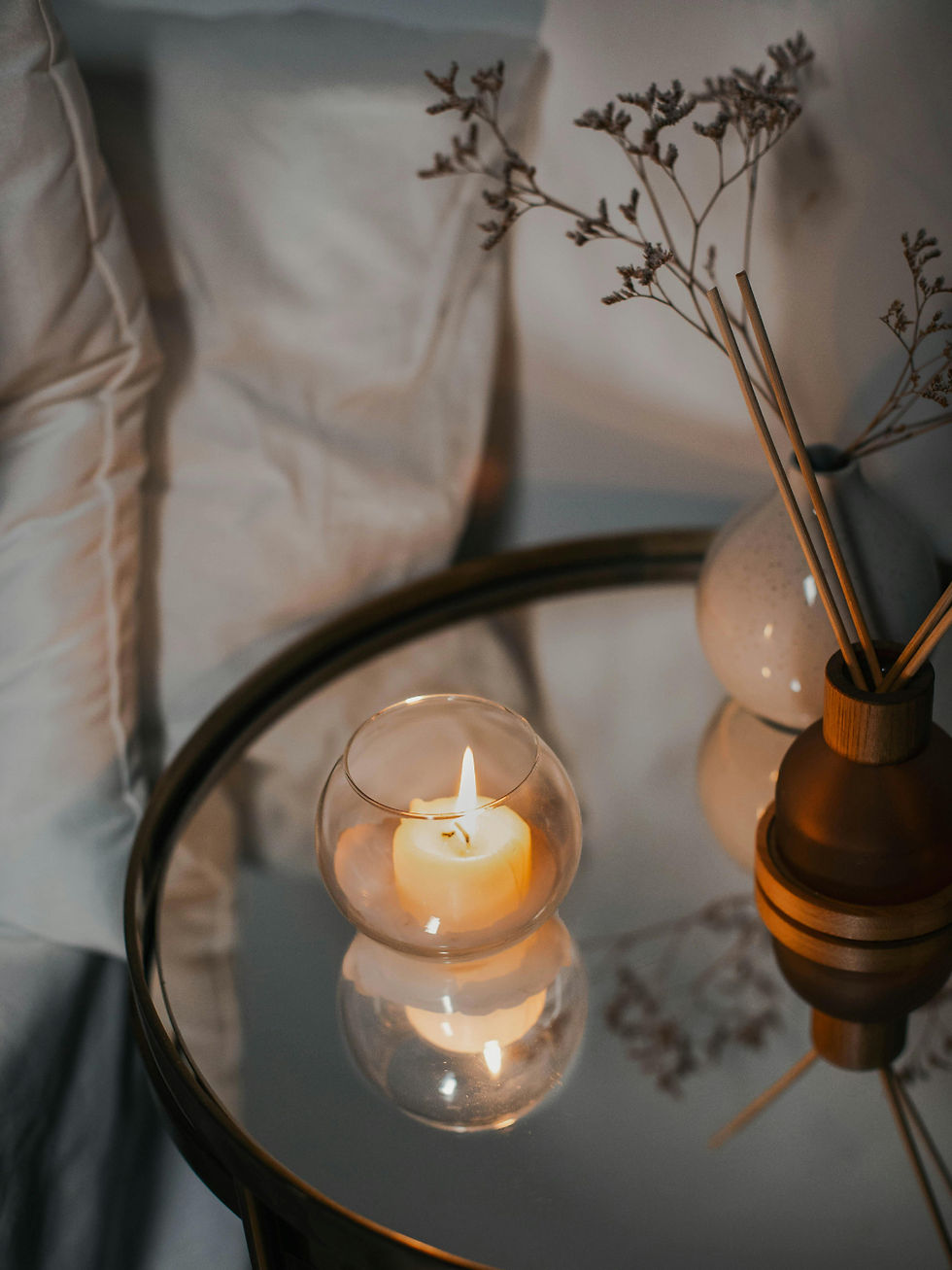
Turning off overhead lights. Switching on a lamp. Lighting a candle.
This small change signals that the day is winding down. It’s subtle, but it changes how the space feels almost immediately.
Why it matters:
Your environment influences how your body responds.
2. A Small Reset of My Space
I don’t clean the entire house at night. But I do a light reset of the spaces I’m in.
This might look like:
Clearing a surface
Folding a blanket
Putting away a few things from the day
It’s not about productivity. It’s about creating a space that feels calm to return to.
Why it matters:
A clear space makes it easier for your mind to settle.
3. Creating a Familiar Cue
I like to have one small ritual that repeats most evenings. Something simple and sensory.
Usually:
Making tea
Lighting a candle
Playing quiet music
Over time, this becomes something I associate with rest.
Why it matters:
Repetition creates a sense of safety and familiarity.
4. Reducing Stimulation Gradually
I don’t cut off screens all at once. Instead, I soften the transition.
Lower brightness. Quieter content. A bit more distance from my phone.
Even a short break from constant input helps.
Why it matters:
Your mind needs time to slow down, not stop abruptly.
5. A Moment to Reflect or Release
Before the day fully ends, I try to clear some mental space. Nothing structured.
Sometimes it’s:
Writing a few lines
Thinking through the day
Noting one thing that felt good
Other times it’s just sitting quietly.
Why it matters:
It helps close the loop of the day.
6. One Comforting Habit
This is the part I look forward to. Something simple and grounding.
It might be:
A warm shower
Reading a few pages of a book
Sitting with a blanket and tea
It doesn’t need to be long or elaborate. Just something that feels like a soft ending.
Why it matters:
Comfort helps your body move toward rest.
7. Letting the Day Be Enough
Not every evening needs to be optimized. Some nights will feel rushed. Others unstructured.
Instead of trying to fix the day at the end of it, I let it be complete. There is nothing left to prove by the time evening arrives.
Why it matters:
Rest becomes easier when the day feels finished.
Products I like that support this ritual:
If you’re ready to actually shift your evenings (not just think about it), the 14-Day Slow Evening Reset walks you through one small change each day, so it feels doable, not overwhelming.
It includes guided steps, journal prompts, and a flexible routine planner to help you create something that fits your life.
(You can access the full guide here — instant download.)

When the Routine Doesn’t Happen
Some nights don’t leave space for a full routine. That’s normal.
On those days, I return to the smallest version:
Turning off one light
Taking one deep breath
Pausing for a moment before bed
Even a small signal is enough. Consistency comes from returning, not doing everything.
Why This Ritual Actually Works
This routine isn’t about discipline.
It works because it:
Signals a clear end to the day
Reduces stimulation before sleep
Creates small moments of calm
Supports your nervous system
It’s less about the actions, and more about the feeling they create.
How to Create Your Own Evening Ritual
If you want to build something that lasts, start here:
Choose 2–3 elements that feel calming
Keep them simple and repeatable
Let them shift depending on your energy
Focus on how you want your evenings to feel
A ritual that feels gentle will always be easier to return to.
A Thought to Return To
A calm evening doesn’t require more time. Just a softer ending.
Other posts you might like:
Resources you may like:




Comments