How to Create a Calm, Earthy Home (Even in a Small Space)
Updated: Jun 1
This post may contain affiliate links. If you choose to purchase through these links, I may earn a small commission at no extra cost to you. I only share products that I genuinely love and believe add value to a slower, more intentional way of living. Thank you for your support!
A calm, earthy home isn’t about square footage, perfect lighting, or expensive renovations.
It’s about how your space feels when you move through it.
Even small homes and apartments can feel grounded, warm, and intentional. Not by adding more, but by choosing thoughtfully and working with what you already have.
This guide focuses on simple, practical ways to create a calm, earthy atmosphere that supports rest and daily life, no matter the size of your space.
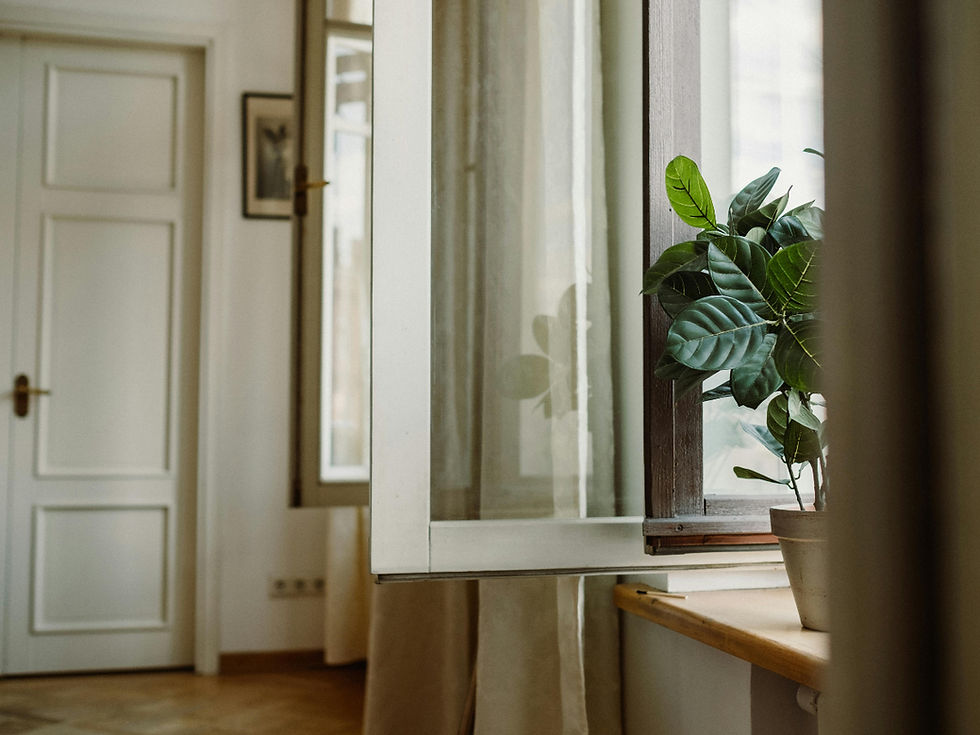
What Makes a Home Feel Calm and Earthy?
An earthy home is inspired by nature, not in a literal way, but in how it supports the nervous system.
These spaces tend to feel:
Warm rather than stark
Textured rather than polished
Quiet rather than visually busy
Calm comes from cohesion and restraint, not perfection.
1. Start With a Soft, Natural Color Palette
Color has a huge impact on how a space feels.
For a calm, earthy base, focus on:
Warm whites
Soft beige or sand tones
Muted greens
Warm browns and clay tones
In small spaces, lighter tones help reflect light while still feeling warm.
You don’t need to repaint everything.
Textiles, art, and accessories can bring in color gently.
Tip: Choose one main neutral and one accent tone to keep the space cohesive.
2. Layer Natural Textures (Even in Small Doses)
Texture creates warmth without visual clutter.
In a small space, a few intentional textures go a long way:
Linen or cotton curtains
Wool or jute rugs
Wood accents
Ceramic or stone pieces
Avoid adding many small decorative items.
Instead, choose fewer pieces with natural materials.
Why it works:
Texture adds depth without overwhelming the space.
Products I like that add texture:
3. Let Light Do Some of the Work
Lighting can completely change the mood of a room.
To create a calm atmosphere:
Use warm bulbs instead of cool white
Add table or floor lamps instead of relying on overhead lights
Choose soft, diffused light where possible
In small spaces, layered lighting makes the room feel more intentional and less harsh.
Tip: One warm lamp can shift the entire feel of a room.
Products I like for lighting:
4. Keep Surfaces Simple and Purposeful
Clutter is one of the biggest sources of visual stress, especially in small homes.
Aim for:
Clear countertops
Minimal decor on shelves
A few intentional objects instead of many small ones
This doesn’t mean empty or cold.
It means allowing each item to breathe.
Ask:
Does this add calm, or just fill space?
5. Choose Furniture With Soft Lines
In small spaces, furniture shape matters.
Earthy, calming spaces often include:
Rounded edges
Low-profile furniture
Pieces that feel grounded and stable
If replacing furniture isn’t an option, soften the space with:
Cushions
Throws
Rounded decor elements
Why it works:
Soft lines feel more natural and less rigid.
6. Bring Nature Indoors (Real or Subtle)
Plants instantly make a space feel more alive, but they’re not the only option.
If plants aren’t realistic for you:
Use botanical art
Incorporate natural materials
Choose organic shapes
A single plant in a small space is enough to shift the atmosphere.
Tip: Start with one easy-care plant and build slowly.
7. Create One Calm Anchor Area
Instead of trying to transform your entire home at once, focus on one anchor space.
This might be:
A corner of your living room
Your bedside table
A reading chair
Your entryway
When one area feels calm, it often influences the rest of the home.
Why it works:
Small wins build momentum.
8. Edit Before You Add
One of the most effective ways to create a calm space is removing what no longer serves it.
Before buying anything new:
Rearrange what you already have
Remove excess decor
Store items you’re unsure about
Less visual noise = more calm.
9. Choose Decor That Feels Personal, Not Trendy
Earthy spaces feel grounding because they feel lived in, not staged.
Choose items that:
Have meaning
Are functional
Reflect your values
Your home doesn’t need to follow trends to feel beautiful.
10. Let Your Home Evolve Slowly
A calm home is built over time.
There’s no rush to finish or perfect it.
Let your space change with your life.
The most grounding homes aren’t complete, they’re considered.
A Calm, Earthy Home Is a Feeling, Not a Formula
You don’t need more space, more money, or a perfect aesthetic.
You need:
Intention
Restraint
A focus on how your home supports you
Even small spaces can feel spacious when they’re designed with care.
A Thought to Return To
A calm home doesn’t ask for attention.
It quietly supports you, every day.

Other posts you might like:


Comments